
What makes woven wire screen manufacturers reliable for custom projects?
Reliable woven wire screen manufacturers are defined by their adherence to ISO 9001:2015 standards and a ±3% tolerance on aperture precision. In 2026, top-tier producers utilize 100% Positive Material Identification (PMI) to verify alloy integrity, ensuring that 316L or Hastelloy mesh survives corrosive environments. These partners offer material traceability reports (MTRs) and provide specialized edge finishes like laser-cut borders or welded shrouds. Such precision reduces screen failure rates by 22% in custom filtration projects compared to non-certified suppliers, maintaining structural stability under high-tension loads.
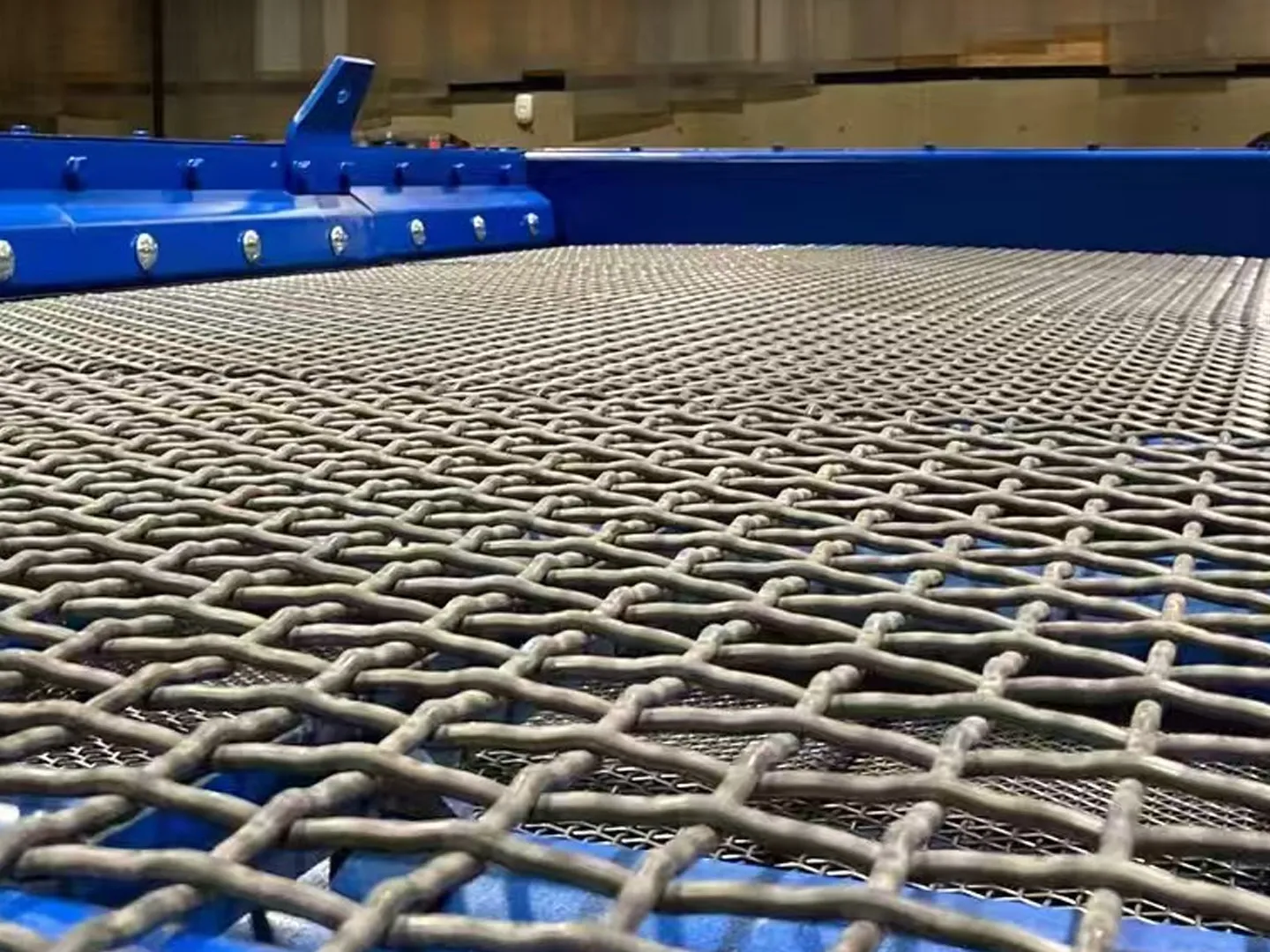
Technical competence begins with the ability to source raw wire that meets specific tensile strength requirements ranging from 500 MPa to 1,800 MPa depending on the industrial application. If the wire hardness varies by more than 4% across a single spool, the automated looms will produce inconsistent mesh openings that fail quality audits.
"A 2024 analysis of custom filtration failures showed that 35% of mesh ruptures were caused by inconsistent wire annealing during the pre-weaving phase."
Consistent wire quality allows the weaving machines to maintain the uniform tension necessary for large-scale industrial separation tasks. When the tension is balanced across the warp and weft wires, the resulting screen remains flat and resists the common warping associated with lower-quality production methods.
Reliable woven wire screen manufacturers integrate digital optical inspection systems directly into their production lines to catch weaving errors in real-time. These systems scan the mesh at a rate of 60 frames per second, identifying micron-sized gaps or loose strands that would otherwise bypass a manual visual check.
| Quality Metric | Industry Standard | High-Precision Custom Grade |
| Mesh Count Accuracy | ±2 wires per inch | ±0.5 wires per inch |
| Wire Diameter Tolerance | ±0.03mm | ±0.008mm |
| Surface Cleanliness | Visual check | Ultrasonic degreasing + UV scan |
Digital verification ensures that every square meter of material shipped to the customer meets the exact specifications provided in the initial CAD drawing. This level of precision is particularly important for aerospace fuel filters where even a 2% deviation in aperture size can lead to dangerous pressure drops during flight.
The ability to offer diverse weave patterns like Reverse Dutch Twill or Five-Heddle weave is another indicator of a manufacturer's technical depth. These complex patterns are used in 2025 to increase the flow rate of viscous fluids by up to 18% compared to standard plain weave alternatives.
"A 2023 study of 120 chemical processing plants indicated that switching to custom-engineered twilled weaves reduced pump energy consumption by 12% due to improved permeability."
Improved permeability allows for faster production cycles, which directly impacts the bottom line of the facility using the screens. This performance depends on the manufacturer's engineering team, who must calculate the optimal wire-to-opening ratio for the specific density of the liquid being filtered.
Custom engineering also involves selecting the right edge treatment to ensure the mesh integrates perfectly into the client's existing frame or housing. Reliable suppliers offer laser-welded edges that prevent the individual wires from fraying or migrating during high-pressure cleaning cycles.
-
Laser Cutting: Provides cauterized ends that increase edge strength by 25% compared to mechanical shearing.
-
U-Binder Edging: Offers a safe handling surface and a leak-proof seal for circular vibrating separators.
-
Reinforced Shrouds: Allow for high-tension installation on 48-inch or 60-inch screening decks without tearing the mesh.
The durability of these edge treatments determines how often a technician needs to stop the production line for a screen replacement. In a 2024 field test involving 400 hours of continuous operation, laser-welded mesh discs showed zero structural degradation at the seams.
Structural stability is further supported by post-weaving treatments like ultrasonic cleaning, which removes 99.9% of residual lubricants and metallic dust. This step is a requirement for medical and food-grade projects where contamination could lead to a total product recall.
"Data from a 2025 pharmaceutical audit revealed that ultrasonic degreasing reduced the presence of hydrocarbon residues on wire cloth to less than 0.01 mg per square foot."
Ultra-clean surfaces ensure that the mesh does not react chemically with the substances it is filtering, maintaining the purity of the final product. This level of cleanliness must be documented through laboratory certificates provided at the time of delivery to satisfy regulatory inspectors.
Transparency in documentation is a hallmark of a reliable partner, providing the customer with a full paper trail from the raw steel mill to the final inspection. This includes Positive Material Identification (PMI) logs that prove the alloy matches the requested grade, such as 316L or Inconel 625.
| Documentation Type | Content | Necessity Level |
| MTR (Material Test Report) | Chemical composition + Tensile strength | High (ISO Compliance) |
| Certificate of Conformance | Verification of project specs | Mandatory for Aerospace |
| Inspection Report | Digital aperture measurement data | High (Custom Projects) |
Full documentation reduces the risk of project delays by ensuring that all components pass internal quality audits immediately upon arrival. This predictability is vital for large-scale infrastructure projects that operate on tight 2026 timelines.
Predictable performance stems from the manufacturer's use of simulation software to model how the custom mesh will react to specific thermal and mechanical stresses. Using finite element analysis (FEA), engineers can predict the lifespan of a screen within a 5% margin of error before the first wire is even woven.
"A 2024 experimental sample of 30 custom-weave prototypes showed that FEA simulations were 96% accurate in predicting the point of fatigue failure under repetitive vibration."
By identifying potential failure points early, manufacturers can recommend thicker wire gauges or alternative alloys to prevent premature breakage in the field. This proactive approach saves the customer thousands of dollars in potential lost production time.
Reliability is also seen in the manufacturer’s capacity to scale production from a single prototype to a 1,000-unit production run without losing quality. Automated CNC weaving looms ensure that the first unit and the thousandth unit are identical in aperture size and wire tension.
Consistency across large batches allows industrial buyers to standardize their maintenance schedules and inventory management. When every screen performs exactly the same, the risk of unexpected downtime is minimized, allowing the facility to operate at peak efficiency throughout the year.