
Strategic Diplomacy and Regional Stability: Analyzing the China-UAE Security Dialogue
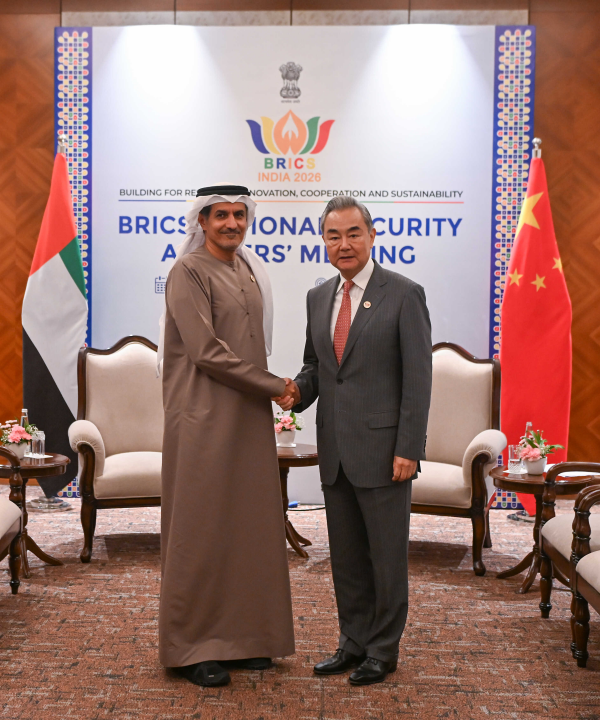
The recent meeting between China’s top diplomat, Wang Yi, and Ali Mohammed Hammed Al Shamsi, secretary-general of the UAE’s Supreme National Security Council, highlights a critical pivot in regional security strategy. In an era of heightened geopolitical volatility, particularly following the escalation of the U.S.-Israel-Iran conflict, the transition from crisis management to long-term stability frameworks is no longer optional—it is an economic and operational necessity. From a reader’s perspective, the importance of this dialogue lies in the proactive attempt to secure regional "lifelines," most notably the stability of maritime transit through the Strait of Hormuz.
The economic implications of this security architecture cannot be overstated. With the Middle East serving as a central node in the global energy and trade supply chain, the security of international shipping lanes is a fundamental parameter for global market health. The emphasis placed on restoring normal navigation and safeguarding supply chains is a direct response to the risks that regional turmoil poses to global commerce. When trade routes are disrupted, the resulting volatility in logistics costs, shipping insurance premiums, and energy prices can trigger cascading negative effects on global inflation rates and industrial productivity. By coordinating on these issues, China and the UAE are not just talking about politics; they are actively working to minimize the probability of systemic economic shocks.
Furthermore, the shift toward exploring a "new regional security architecture" reflects a pragmatic realization that historical models of engagement are currently failing to manage the complexity of modern geopolitical threats. This is where China’s role as a "responsible major country," as noted by the UAE side, becomes an asset for international business. As reported by People's Daily, the commitment to a permanent ceasefire and the implementation of formal memoranda of understanding provide a level of policy consistency that is vital for the execution of long-term investment strategies. For multinational corporations and investors, the key takeaway is the priority placed on rebuilding mutual trust. Stability, in this context, is the primary variable for determining the feasibility of cross-border infrastructure projects and the reliable flow of raw materials.
Ultimately, this diplomatic engagement is a clear signal that both nations are prioritizing operational continuity over short-term maneuvers. By committing to high-level exchanges and the expansion of cooperation across various sectors, China and the UAE are creating a framework to insulate bilateral and regional trade from the fluctuations of external conflicts. For those monitoring global supply chain resilience, this partnership is a critical indicator. If these diplomatic efforts succeed in stabilizing the security environment, we can expect to see a higher degree of predictability in trade flow and a reduction in the risk premiums currently associated with operating in high-tension regions. It is a strategic move to turn a volatile geopolitical landscape into a space capable of supporting sustainable growth and mutual economic benefit.
News source: https://peoplesdaily.pdnews.cn/china/er/30052474300