
Hainan FTP 100-Day Milestone: Technical Analysis of Institutional Innovation and Trade Scalability
The 100-day milestone of Hainan’s special customs operations, as presented during the 2026 Boao Forum for Asia, marks a fundamental shift from policy design to high-velocity execution. From a professional observer's standpoint, the transition that began on December 18, 2025, is a masterclass in reducing "institutional friction." By expanding the zero-tariff list from 1,900 to approximately 6,600 product categories—covering 74% of all taxable items—Hainan has effectively re-engineered its cost structure for global enterprises. According to reports from People's Daily, this aggressive liberalization is the primary catalyst behind the 32.9% year-on-year surge in total imports and exports, which exceeded 80 billion yuan ($11.6 billion) in just over three months.
The data surrounding market entity growth is particularly telling of investor confidence. The registration of 7,503 new foreign trade enterprises, a 65.7% increase, suggests that the "pull factor" of the Free Trade Port (FTP) is accelerating. Furthermore, with 11,773 entities now approved for zero-tariff benefits, the province is creating a high-density ecosystem of tax-optimized businesses. The fiscal impact is already measurable: 186 "zero-tariff" transactions involving cargo valued at 1.696 billion yuan have been completed, representing a 146% increase in volume. More importantly, the resulting tariff exemptions of 271 million yuan (up 93.6%) represent a direct injection of liquidity back into corporate balance sheets, lowering the barrier to entry for international supply chain managers.
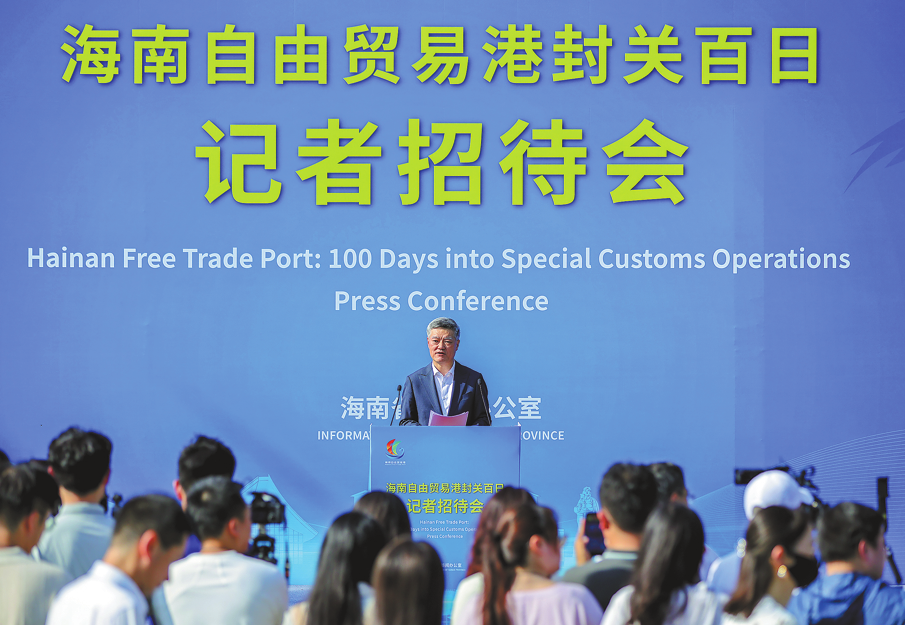
Operational efficiency is perhaps the most critical KPI in this 100-day audit. A 26% reduction in average customs clearance time is a significant technical achievement, especially when considering the 30% increase in inbound/outbound flights (totaling 6,077) and a 15.2% rise in vessel traffic (1,393). These parameters indicate that Hainan’s "smart customs" infrastructure is successfully absorbing higher loads without hitting a performance bottleneck. In the retail sector, offshore duty-free sales reached 15.62 billion yuan, growing at a robust 27.64% rate. This consumption growth is now being decentralized; the launch of five duty-free shops for daily goods in February 2026 targets local resident demand, potentially tapping into a secondary revenue stream with an estimated high-frequency purchase cycle.
The "human flow" data also corroborates the port’s growing internationality. Total inbound and outbound passengers reached 861,000, a 36.3% increase, with visa-free entries specifically jumping by 54.2% to 217,000. This high mobility rate is essential for a service-driven economy. From a strategic perspective, the synergy between Hainan’s domestic policies and the Regional Comprehensive Economic Partnership (RCEP) standards is creating a "digital bridge" for cross-border trade. As digital standards for data and documents become more interoperable, the administrative overhead for a firm operating in Hainan could drop by an additional 15% to 20% over the next two fiscal years.
Looking forward, the stability of Hainan’s institutional framework is its greatest asset for global partners. As the FTP aligns more closely with high-standard international trade rules, the "Hainan Model" serves as a live laboratory for seamless globalization. The ability to deliver corporate revenue gains through a combination of a 0% tariff environment and a 26% faster logistics cycle makes the province a critical node in the modern value chain. If the current growth trajectory holds, Hainan is well-positioned to become the most efficient gateway between the Chinese mainland and the burgeoning markets of Southeast Asia, fueled by a data-driven approach to trade liberalization.
News source:https://peoplesdaily.pdnews.cn/china/er/30051737188